YOUTH JUSTICE
WORKSHOP
FOR PRACTITIONERS
Understanding the Landscape &
What Helps Young People Move Away
from Crime

Practitioners are often balancing direct work with young people alongside system requirements, reports and policy.
This workshop adds another layer: Insights drawn from ongoing lived experience mentoring relationships with young people navigating the justice system.
At 16 Yards, lived experience is shaped into practical, adaptable approaches that can be applied in frontline work.

WHAT THIS WORK IS BUILT ON
In the past year, 16 Yards has:
✓⃝ worked alongside over 100 young people across custody and community settings
✓⃝ supported the majority to step away from offending
✓⃝ delivered mentoring, programs and training across justice and community settings
✓⃝ partnered with government and sector organisations on frontline delivery
This workshop draws directly from that work.
WHAT TO EXPECT / WHAT YOU’LL WALK AWAY WITH

WHAT THE WORKSHOP FOCUSES ON
Understanding the Current Terrain of Youth Justice
Delivered by Prof. Stephane Shepherd, PhD (Forensic Psychology)
Stephane Shepherd presents insights drawn from real data connected to young people engaged with the 16 Yards network.
The session explores patterns within youth justice while also highlighting something often missed. Within the same groups of young people there are strengths, capabilities and positive indicators that rarely shape the broader conversation.
Participants gain a clearer understanding of:
• current youth justice patterns and trends
• the environments young people are navigating
• strengths and protective factors emerging within the data
• what these insights mean for day-to-day practice
Identity Transformation: The 16 Yards Approach
Delivered by Shayne Hood, Strengths-Based Service Designer & Westpac Scholar
This session sets the foundation for how the rest of the workshop is understood.
Shayne unpacks the origins of the 16 Yards Identity Transformation Model and the work it has been built from. This includes years of mentoring young people in custody and the community, alongside the insights of lived experience mentors who have successfully shifted their own direction.
The model was developed through direct work with young people, not theory alone. It reflects what consistently shows up when young people begin to move away from crime and towards something more stable and meaningful.
This session explores:
• where the model came from and how it has been shaped through lived experience and frontline work
• why identity sits at the centre of behaviour, decision-making and direction
• how young people begin to shift how they see themselves
• how strengths, capability and aspiration start to emerge in that process
• what conditions need to be present for change to take hold
• how this approach differs from compliance-driven or deficit-focused models
The session also introduces how the model is applied in practice across mentoring, group programs and one-to-one work with young people navigating complex environments.
This creates a clear foundation for understanding the rest of the workshop and how the different elements connect.
Peer Dynamics, Identity and Pathways Into and Out of Crime
Delivered by 16 Yards Lived Experience Practitioners
This section explores the depth and complexity of peer-affiliated dynamics and how they shape behaviour.
Drawing from lived experience and research, it examines how:
• peer groups provide identity, belonging and validation
• loyalty and shared identity can override individual decision-making
• status, reputation and social media amplify risk
• disconnection from family or culture increases reliance on peers
Participants also explore:
• how they can build trust quickly in these environments
• how to engage without directly challenging identity
• how to recognise strengths and transferable skills within peer dynamics
• how to redirect those strengths into more constructive pathways
Substance Use and Identity Work in Practice
Delivered by 16 Yards Lived Experience AOD Consultants
This session draws from frontline AOD work and AOD lived experience
Substance use is explored in the context of identity, coping and environment rather than treated as a standalone issue.
Participants explore:
• how substance use connects to identity, belonging and pressure
• working with young people navigating recovery in real conditions
• building connection and rapport as the foundation
• harm minimisation and knowing what to focus on
• using lived experience appropriately
• identifying and shifting unhelpful narratives
• building self-determination through accountability and structure
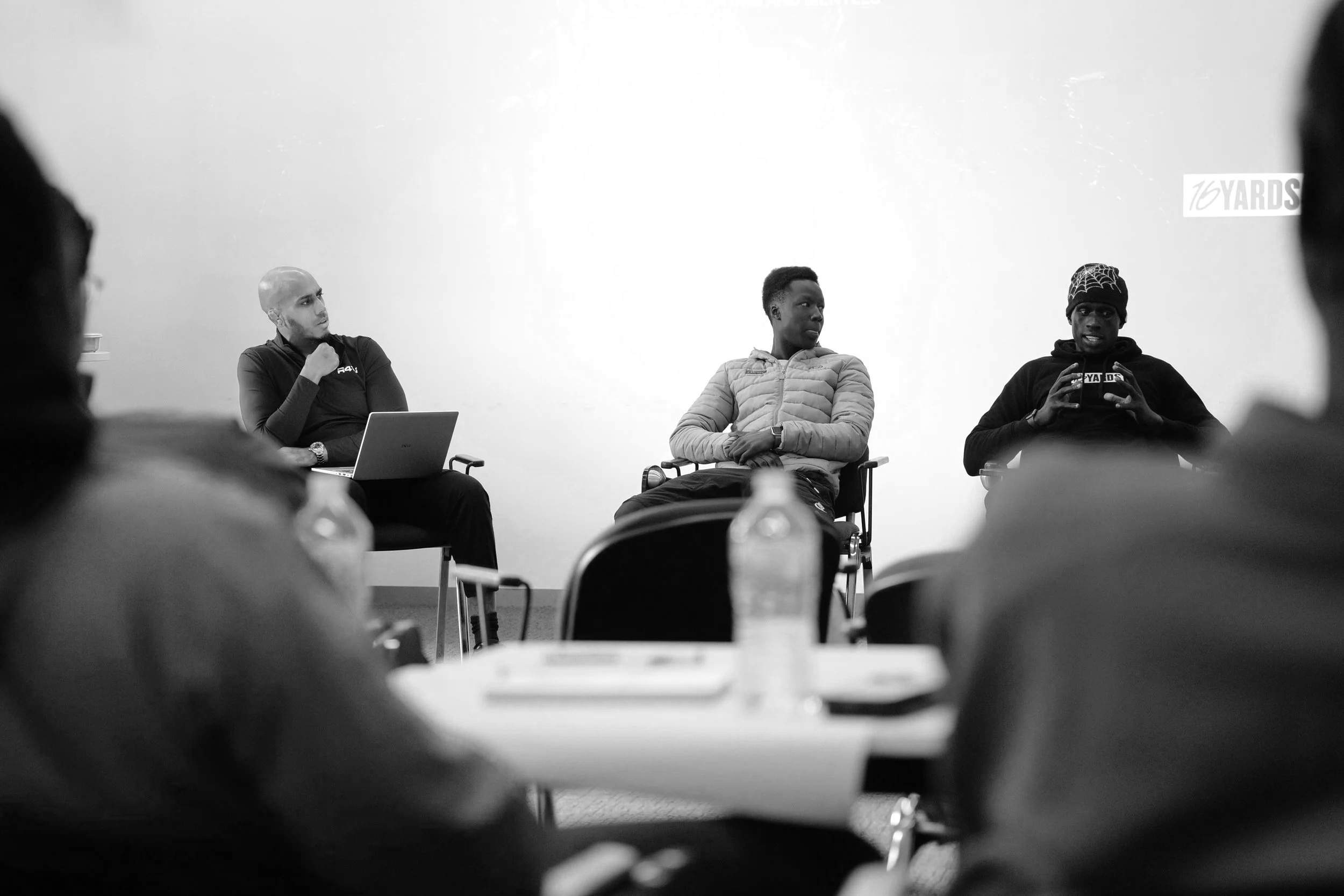
Lived Experience Panel
Delivered by 16 Yards Lived Experience Practitioners
Participants hear directly from:
• lived experience mentors working within the 16 Yards network
• a young person connected to the program
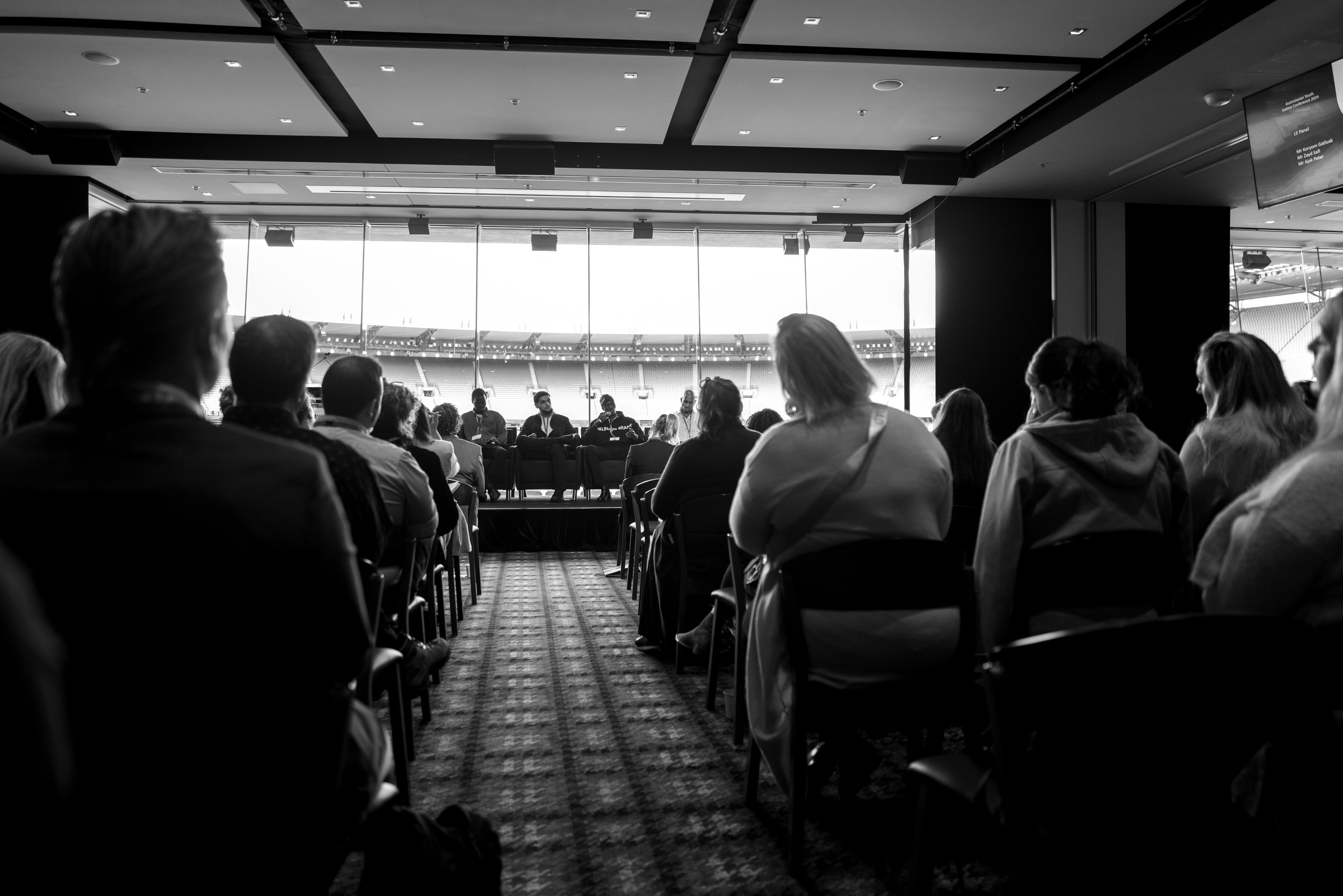
These conversations give direct insight into identity, pressure, change and the realities behind the data.
They will help practitioners understand behaviour, motivation and engagement.
Cultural Considerations in Practice
Delivered by 16 Yards Lived Experience Cultural Consultants
Young people’s experiences are shaped by culture, religion, migration, family dynamics and community context.
This section explores how these factors influence both risk, protection and desistance.
Participants explore:
• the impact of migration and resettlement on family structure and support
• intergenerational tension and identity formation
• cultural/religious identity and belonging
• the role of family and community as protective factors
• the importance of culturally responsive and community-led approaches

WHO IT’S FOR

Whether you’re embedded in a system or working at its edge, this training offers something solid to stand on.
WHAT PRACTITIONERS TAKE FROM THIS
Participants leave with a clearer understanding of:
✓⃝ what young people are navigating day to day
✓⃝ how identity, peers and environment shape behaviour
✓⃝ how substance use connects to coping, identity and peer group behaviour
✓⃝ how to build trust and engagement more effectively
✓⃝ how to recognise and work with strengths
✓⃝ how to support identity change in practical ways